
If you’ve looked at your front door, interior doors, baseboards, or kitchen cabinets lately and thought, “These shouldn’t look this worn,” you may be right. Paint always works hard, but certain surfaces work particularly hard. Outdoors, we deal with intense UV exposure, temperature swings, dust, and more. Indoors, the real threat is the level of traffic and use, and whether or not the previous paint job was applied in a way that promotes the kind of performance and longevity you expect.
At this point, the question isn’t just whether to repaint. It’s whether you’re choosing a finish built for its environment.
Let’s walk through it, focusing today on interior surfaces in particular.
What Is Enamel Paint, and Why Does It Matter?
Enamel paint is formulated to dry into a harder, more durable finish than standard wall paint. Painters a generation ago would consider enamel an “oil-based” product, especially in light of waterbased “latex” or “acrylics”. But really the definition is “hard shiny finish”. The oil-based enamels of yesteryear were a great product, but today’s chemistry has come a long way with friendlier water cleanup hybrid coatings that have remarkable qualities surpassing old configurations. Today’s enamels are a tighter molecule and much harder, and finally we have fine-finishes that flow for that beautiful fine-finish that is close to odorless and environmentally friendly.
These characteristics are what make it ideal for high-touch, high-traffic surfaces like:
- Entry doors
- Interior doors
- Baseboards and trim
- Handrails
- Kitchen and bathroom cabinets
- Metal surfaces including doors and “wrought iron” fencing
- HOA common-area doors and millwork
Unlike flat wall paint, enamel resists scuffing, cleans more easily, and holds up better over time. And in a climate like ours here in Mesa, durability isn’t optional. Lower-quality coatings, on the other hand, can soften under heat, fade under UV exposure, or show wear quickly in busy households and multi-unit communities (a good takeaway for you property managers out there). Selecting the right enamel system from the start can significantly extend the life of the project.
Understanding Sheen: Satin, Semi-Gloss, or Gloss?
Sheen impacts durability, cleanability, how much surface texture shows through… and, of course, how shiny it is.
Satin Enamel:
Satin offers a softer, lower-sheen finish. It’s often used on interior trim when homeowners want durability without noticeable shine. Satin also hides minor imperfections better than higher-gloss finishes and creates a more modern, subtle look.
Semi-Gloss Enamel:
This is the most common choice for interior doors, baseboards, and cabinetry. It strikes that balance between appearance and performance, reflecting light enough to feel crisp and clean, but not so much that it exaggerates every surface flaw. For both homeowners and property managers, semi-gloss is often the safest, most practical choice, especially in high-use and high-touch areas.
Gloss Enamel:
Gloss provides the highest shine and the hardest finish. It’s frequently used on statement front doors or decorative trim where durability and visual impact are priorities.
Just keep in mind: gloss highlights imperfections. And that makes proper surface preparation and skilled application all the more critical.
Cabinet Painting: A Different Category Altogether
Cabinet painting requires a higher level of preparation and product consideration.
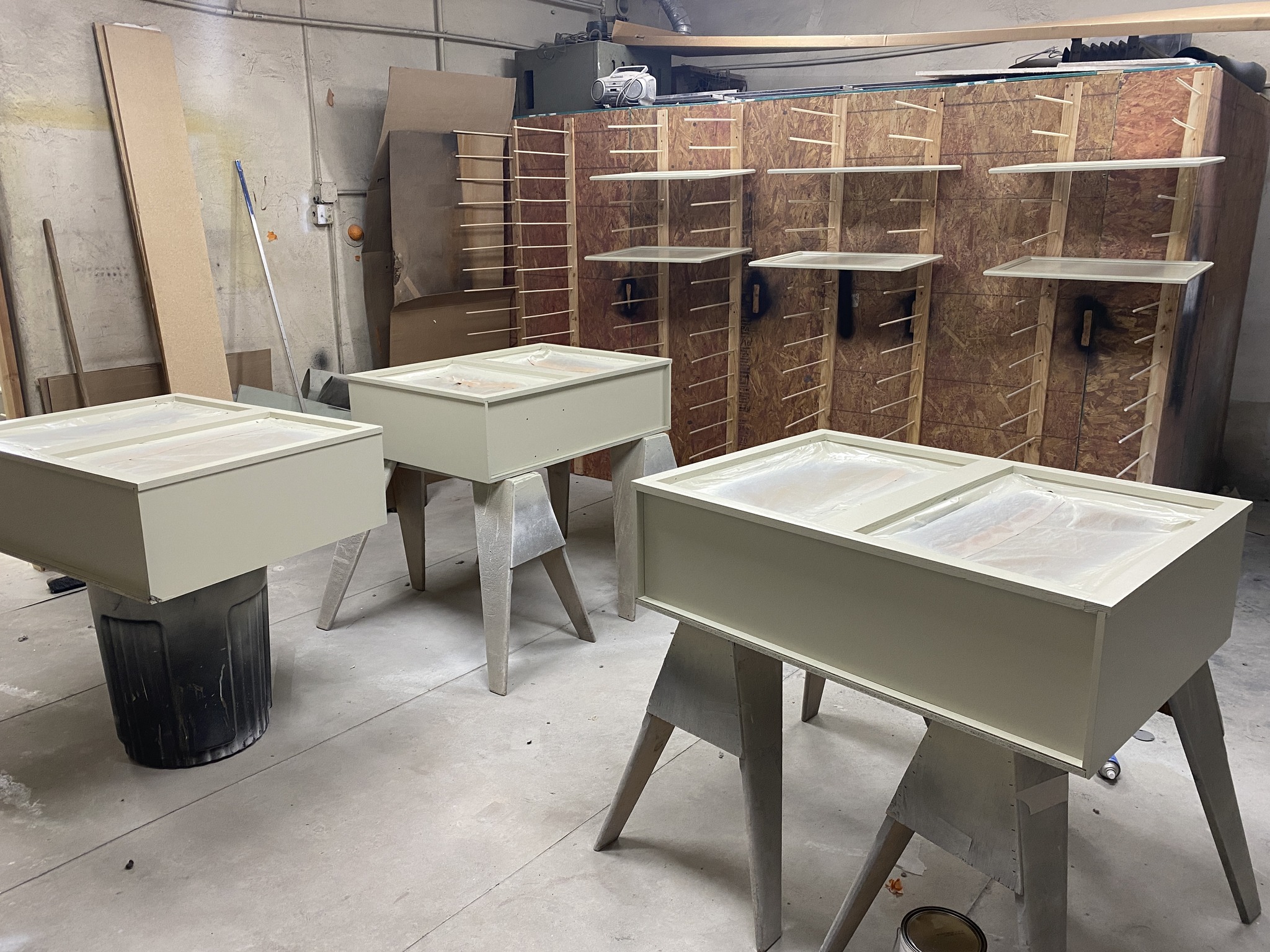
Cabinets must be thoroughly cleaned, sanded or scuff-prepped, properly primed, and often spray-applied to achieve a smooth, furniture-grade fine-finish. Using the wrong product can lead to unsightly spray textures, chipping, sticking doors, or premature wear.
Are you a Phoenix-area homeowner?
If you’re updating your kitchen without committing to a full remodel, cabinet-grade enamel coatings offer a durable, furniture-quality finish that holds up to daily use while giving the space a clean, refreshed look.
Are you a property manager?
When overseeing clubhouse and restroom interior upgrades, durability and cleanability directly impact maintenance costs and turnover timelines. Choosing the right enamel system helps reduce touch-ups, maintain consistency, and extend repaint cycles across the property.
Choosing the Right Finish: A Simple Framework
Let’s keep things simple. Choose Satin If:
- You prefer a softer, modern look
- The area has moderate traffic
- You want less visible shine
Choose Semi-Gloss If:
- The surface gets touched frequently
- Cleanability is important
- You want a durable, widely accepted standard
Choose Gloss If:
- It’s a feature element like a front door
- Maximum durability is the goal
- Substrate is worthy and surface preparation has been done properly
What’s the Takeaway?
Enamel paint is about performance, not just appearance.
In the Phoenix metro area, doors, trim, and cabinets face conditions that accelerate wear. Choosing the correct sheen and product system, and applying it under the right seasonal conditions, can significantly extend the life of the finish. For homeowners, that means fewer repaint cycles and better long-term value. For HOA boards and property managers, it means consistent appearance across common area items and smarter reserve planning.
Frequently Asked Questions About Enamel Paint in Phoenix
Q. Is enamel paint better than regular paint for doors and trim?
Yes. Enamel dries harder and is more durable, making it better suited for high-touch surfaces.
Q. What sheen is most common for interior doors?
Semi-gloss is typically the most popular choice because it balances durability and appearance.
Q. Does Phoenix heat affect paint performance?
Absolutely. Extreme heat can impact curing and longevity, which is why product selection and timing matter.
Q. Can cabinets be painted with enamel?
Yes, but they require proper preparation and a cabinet-grade coating system for best results.